

Adjusting how you use everyday appliances and fixing small inefficiencies around the home can reduce your electricity bills without requiring a full system overhaul. This guide covers the changes that deliver the most consistent results, starting with the lowest-cost steps.
Replace Outdated Appliances
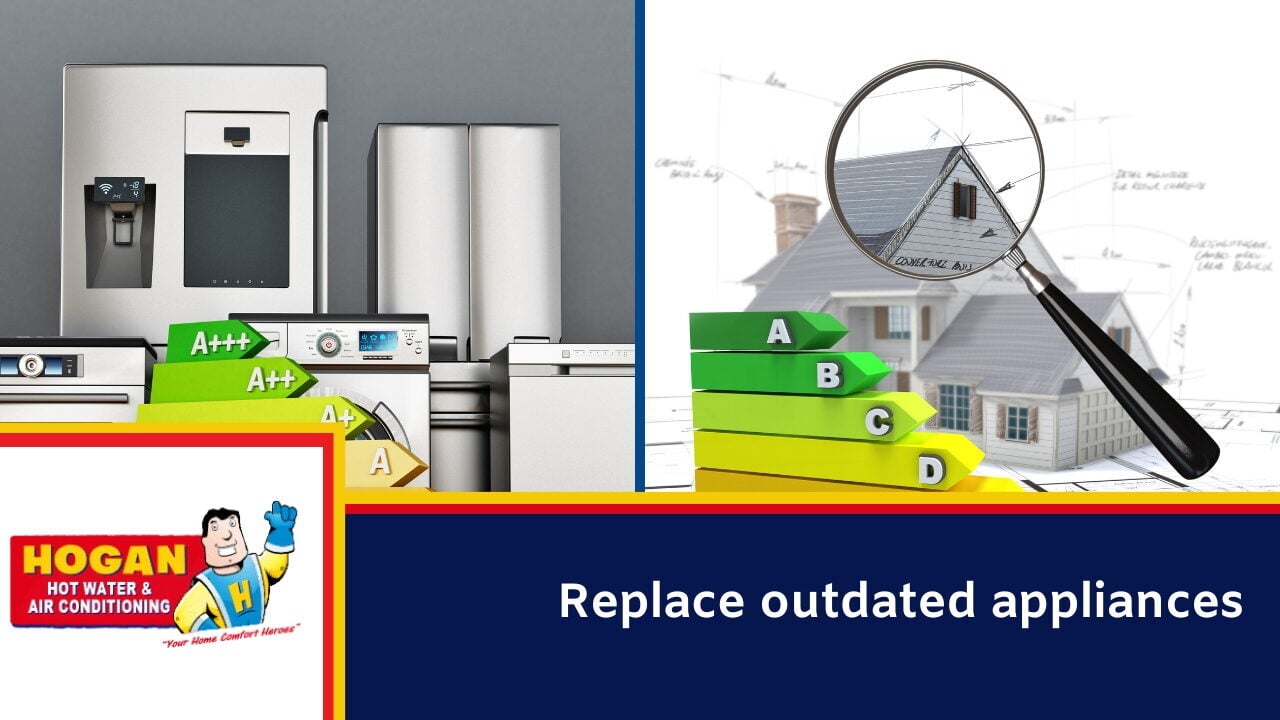
Old appliances consume more energy and often lack the efficiency controls found in newer models. A refrigerator made 15 years ago can use roughly twice as much power as a current equivalent. The same applies to dishwashers, clothes dryers, and hot water systems.
Appliances sold in Australia carry Energy Rating Labels. More stars mean better efficiency, and over time the energy saved often offsets the upfront cost difference. If you are using any system older than a decade, compare its yearly usage against a higher star-rated model before assuming replacement is too expensive.
Look for systems with programmable settings and standby controls. These features let you schedule operation and reduce idle power draw without changing your daily habits.
Use Ceiling Fans to Support Cooling
Ceiling fans do not cool air. They move it, and that airflow helps your body release heat more effectively, making the room feel cooler. This lets you raise the air conditioner thermostat by a few degrees without losing comfort.
Each degree you raise the thermostat can reduce cooling costs by roughly 5 to 10 percent. Ceiling fans draw less than 75 watts on high speed, compared to 2,000 to 3,000 watts for many split systems. That difference adds up across the warmer months.
Switch the fan off when you leave the room. Fans provide comfort only when someone is present to feel the airflow.
Unplug Unused Devices
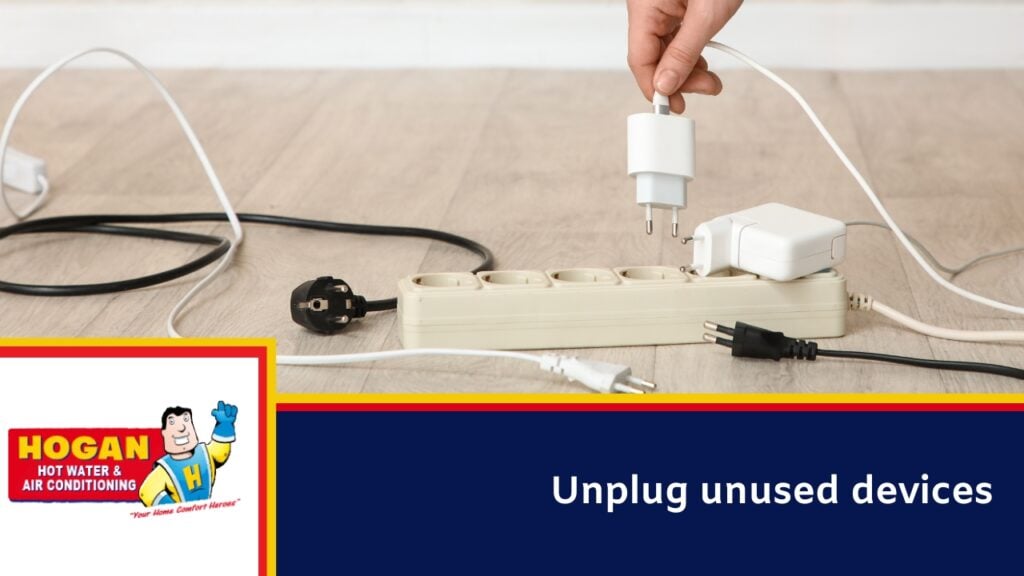
Appliances in standby mode continue drawing power. This includes televisions, microwaves, phone chargers, and game consoles. This passive draw is called phantom load or standby power, and it can account for up to 10 percent of a household’s electricity use.
A switchable power board, or simply unplugging devices when they are not in use, stops this drain. Devices with indicator lights or digital clocks are the most consistent sources. Unplugging overnight or when you leave the house adds steady savings across the year.
Keep Filters Clean
Air conditioners, heaters, and exhaust fans rely on clean airflow to run efficiently. A blocked filter forces the motor to work harder, increasing energy use and shortening the unit’s lifespan.
Check filters monthly and clean them when dust or lint is visible. Some systems use washable mesh filters; others need disposable replacements. Follow the manufacturer’s recommendation, especially during high-use seasons.
A clean filter also improves indoor air quality and helps the system maintain even temperatures.
Plant for Natural Shade
Well-placed trees and shrubs block sunlight from reaching exterior walls and windows, reducing heat gain through summer. Native deciduous trees are a practical long-term choice: their leaves provide shade in summer and drop in winter to let passive warmth through.
Planting on west and north-facing sides of the home targets the walls and windows that receive the most afternoon sun. This reduces the load on cooling systems without any ongoing running cost.

Seal Leaks and Insulate Properly
Unsealed doors, windows, and gaps around fittings let conditioned air escape. Drafts increase demand on both heaters and air conditioners, which lifts power use.
Seal visible gaps using door strips, foam insulation, or caulking. Block vents or unused fireplaces when they are not in use. Focus on window frames, skirting boards, and roof access points, as these are common leak points in older homes.
For lasting impact, improve ceiling and wall insulation. Insulation slows heat transfer in both directions, reducing overall energy demand and improving comfort across all rooms year-round.
Reduce Hot Water Waste
Hot water is a major energy cost in most households. Reducing shower length and keeping the temperature setting practical cuts both water and energy use. Reducing each shower by two minutes can save thousands of litres annually and lower the heating load on your system.
Installing a low-flow showerhead limits water volume while maintaining comfortable pressure. If your system takes a long time to deliver hot water, adjusting the timer or switching to a system with faster recovery times can reduce the amount of cold water wasted while waiting.
Skip the Dryer When Possible
Clothes dryers use a large amount of electricity per cycle. Air-drying on a clothesline or using an indoor rack avoids this load entirely. Most modern fabrics dry in a few hours under indirect sunlight.
In winter or wet weather, position racks near windows or in well-ventilated areas. If a dryer is necessary, run a full load and use a timed cycle rather than sensor-dry to avoid unnecessary extended running time.
Dress for the Temperature
Heating and cooling account for a large proportion of household power use. Dressing for the season reduces the amount of mechanical conditioning needed to stay comfortable. In cooler months, layers and closed footwear indoors can delay or reduce heater use.
In warm months, light clothing and ceiling fans can push back the point at which air conditioning is needed.
This is especially relevant in early mornings and evenings, when brief heating or cooling is often used from habit rather than genuine need.
Maintain Your Systems
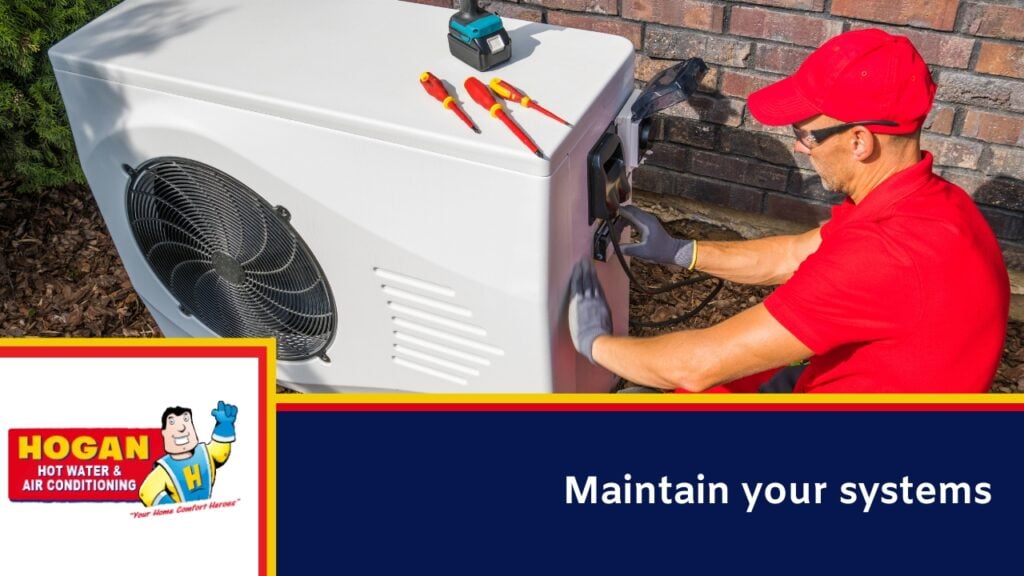
Older systems lose efficiency over time without showing obvious faults. Hot water systems, air conditioners, and heaters all benefit from yearly servicing. Inspections identify worn parts, internal leaks, and faults that increase power draw without obvious symptoms.
Annual Maintenance Checklist
- Flush the hot water system to remove sediment
- Inspect air conditioner coil condition
- Check duct seals for gaps or deterioration
- Verify thermostat accuracy against an independent thermometer
- Clean or replace all filters before high-use seasons
Maintained systems heat and cool faster, use less electricity, and are less likely to fail during peak demand periods.
Quick-Reference: Energy-Saving Actions by Cost and Impact
| Action | Upfront Cost | Ongoing Effort | Primary Benefit |
|---|---|---|---|
| Seal doors, windows, and gaps | Low | Once-off | Reduces heating and cooling demand |
| Clean filters monthly | None | Monthly | Maintains appliance efficiency |
| Unplug standby devices | None | Daily habit | Eliminates phantom load |
| Install low-flow showerhead | Low | Once-off | Reduces hot water energy use |
| Use ceiling fan with AC | Low to nil | Seasonal setting | Lowers cooling electricity use |
| Plant shade trees or shrubs | Low to moderate | Once-off | Reduces summer heat gain |
| Replace appliances over 10 years old | Moderate to high | Once-off | Reduces baseline consumption |
| Annual system servicing | Moderate | Yearly | Maintains efficiency, prevents faults |
Frequently Asked Questions
What is the single most cost-effective energy-saving change?
Sealing air leaks around doors, windows, and vents is usually the lowest-cost step, because it reduces demand on both heating and cooling without buying new equipment.
How much can standby power add to a bill?
Devices left on standby can account for up to 10 percent of a household’s electricity use, so switching off power boards or unplugging idle devices delivers steady savings.
When is it worth replacing an old hot water or cooling system?
If a system is more than about a decade old, compare its yearly energy use against a higher star-rated model. Efficiency gains often offset the upfront cost over time, particularly for systems running daily like hot water heaters and air conditioners.
Our Approach to Reducing Energy Use
At Hogan Hot Water and Air Conditioning, we help households across Newcastle reduce energy waste without compromising comfort. Many changes are low-cost and start with practical steps such as sealing gaps, changing filters, or reviewing old equipment.
When we assess hot water systems or cooling setups, we look at how each part of the home operates, not just the individual product installed. Real energy savings come from choosing equipment suited to the home and using it efficiently over time.
If you are looking to upgrade or reduce household power use, contact us for guidance on where to start.